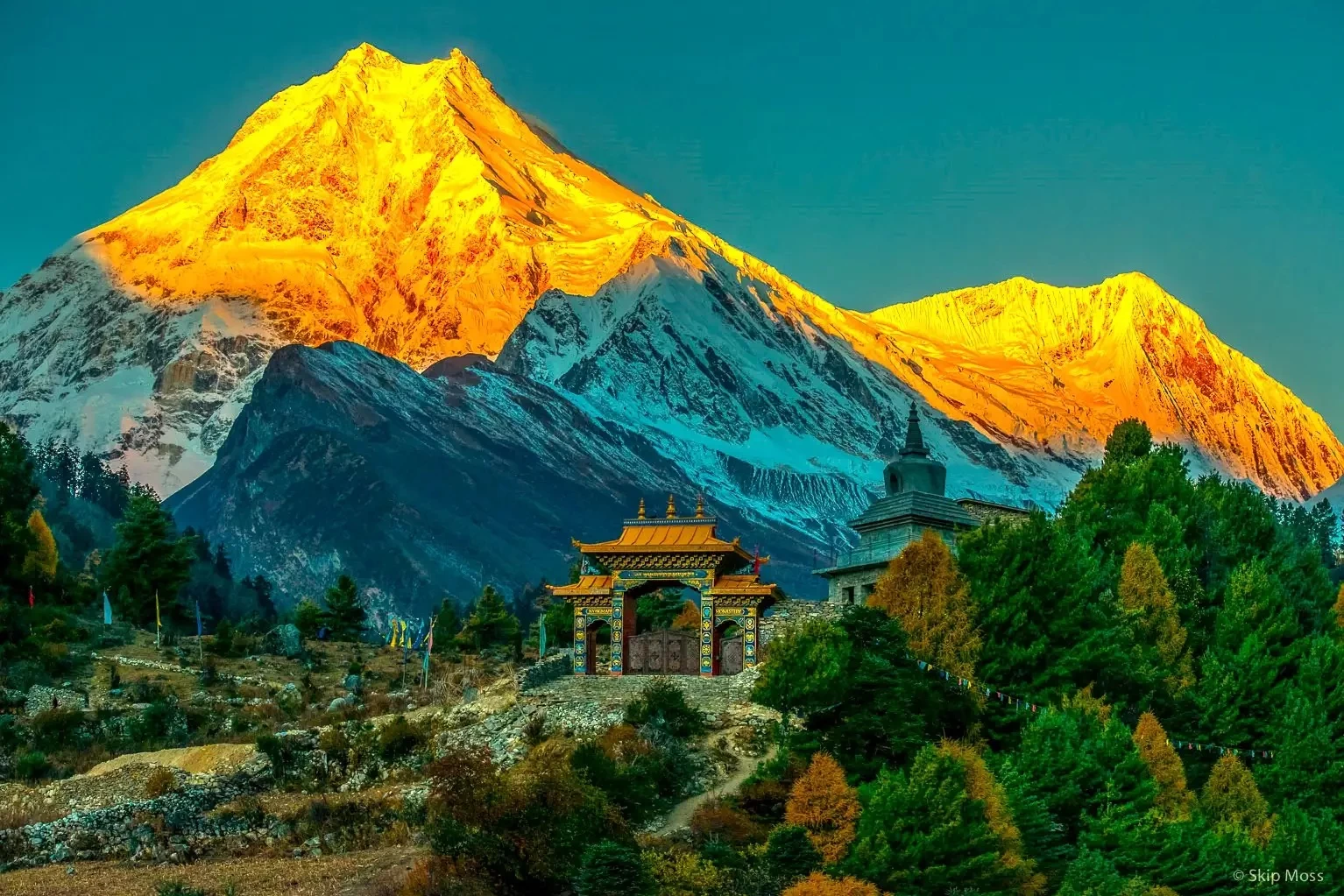
Embark on the Manaslu Circuit Trek, a remote Himalayan adventure offering stunning mountain views, rich Tibetan culture, and the thrilling Larkya La Pass crossing. Perfect for trekkers seeking off-the-beaten-path beauty in Nepal.
 Certified
  Sustainable
  Best Price
  Challenge level
 Destination Destination
|
Nepal |
|---|---|
 Activity Activity
|
Trekking |
 Duration Duration
|
16 Days |
 Meals Meals
|
Include (B, L, D) |
 Accomodation Accomodation
|
Tea-house and Lodges |
 Group size Group size
|
min 2 Persons |
 Best Season Best Season
|
Mar-June | Sep-Nov |
 Max Altitude Max Altitude
|
5,106 m/16,752 ft |
 Trip Code Trip Code
|
1022 |
|
Activity Per Day
|
5-8 hours per day |
 Transportation Transportation
|
Tourist Bus/Private Car |
 Grade Grade
|
Strenuous |
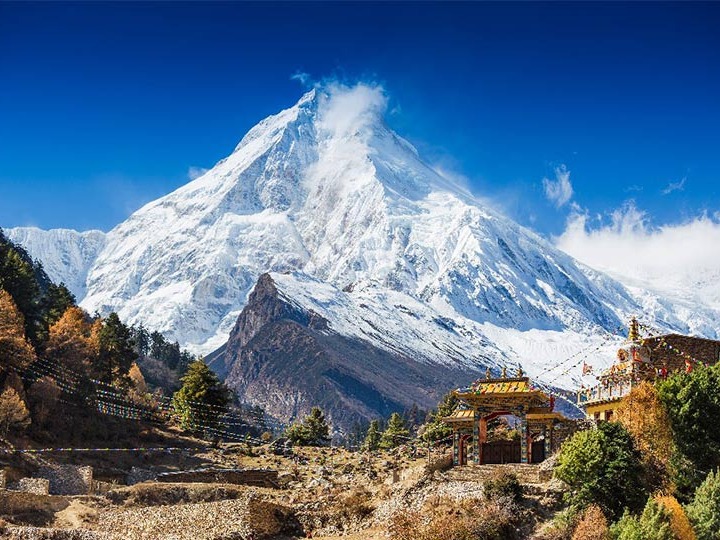
The Manaslu Region, located in the west-central part of Nepal within the Gorkha District, is a remote and pristine trekking area that offers breathtaking scenery, deep cultural heritage, and an adventurous high-altitude trail experience. Dominated by Mount Manaslu (8,163 m), the eighth-highest mountain in the world, the region derives its name from the Sanskrit word "Manasa," meaning "soul" or "intellect," highlighting the spiritual depth and majesty of this region.
It was first opened in 1992 for trekkers. Until then, it was a forbidden area for foreigners. The Manaslu region is renowned for its untouched natural beauty and unique cultural traditions, which remain well-preserved due to its remote location.
The trek primarily follows the Budi Gandaki River and passes through an ecological transition from subtropical forests of rhododendron woods, bamboo, traversing the steamy lowlands with rice and millet terraces.
The Manaslu Circuit Trek is a visual, cultural, and spiritual journey that goes far beyond hiking, it’s an expedition through time, tradition, and raw Himalayan wilderness. From the warm lowlands to icy high passes, this trek delivers a rare blend of solitude, scenery, and culture.
The Manaslu Trek takes adventurers on a visual and ecological journey. The trail passes through the narrow gorges carved by the Budhi Gandaki. One can witness the snow-covered high mountain passes, glacial valleys, and icy moraines.
Birendra Lake, with its brilliant turquoise color, lies below Manaslu Base Camp and reflects the peaks like a mirror.
One of the most breathtaking segments of the trek is the Larkya La Pass, the highest point on the Manaslu Circuit Trek at 5,106 meters, a vantage point offering panoramic views of the surrounding mountains like Cheo Himal, Kang Guru, Annapurna II, Himlung Himal, can be experienced along with Mount Manaslu.
The trail to the pass begins from Dharmasala (Larke Phedi) and involves a long, slow ascent through glacial moraines, frozen lakes, and rugged ridges.
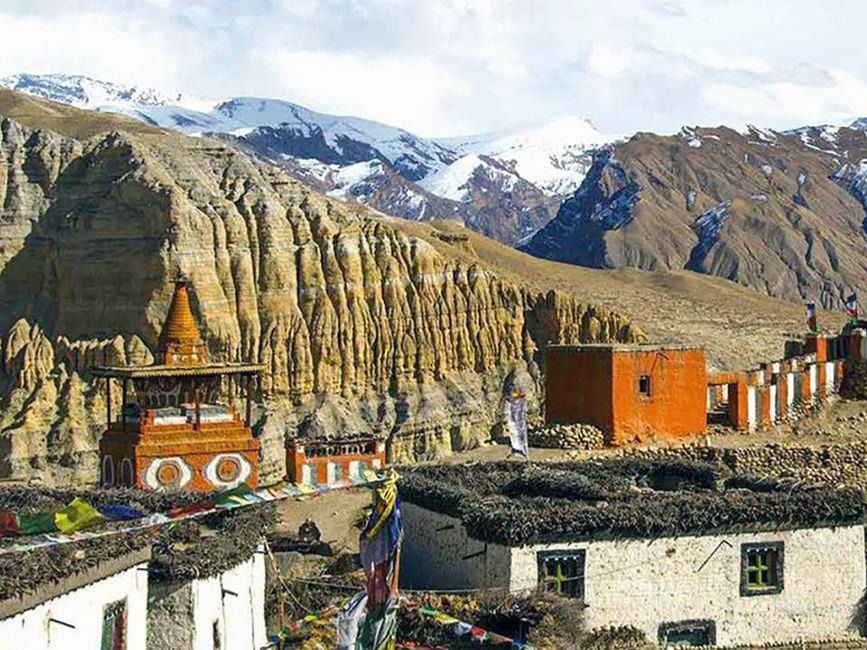
The region has a mix of Tibetan Buddhist culture and ancient Himalayan customs. The Nubri Valley is home to the Nubri people, and Himalayan Bhote is the cultural heart of the upper Manaslu region.
The Ancient Tibetan Buddhist villages, such as Samdo and Sama Gaon, where time seems to stand still, provide you with basic facilities of accommodation.
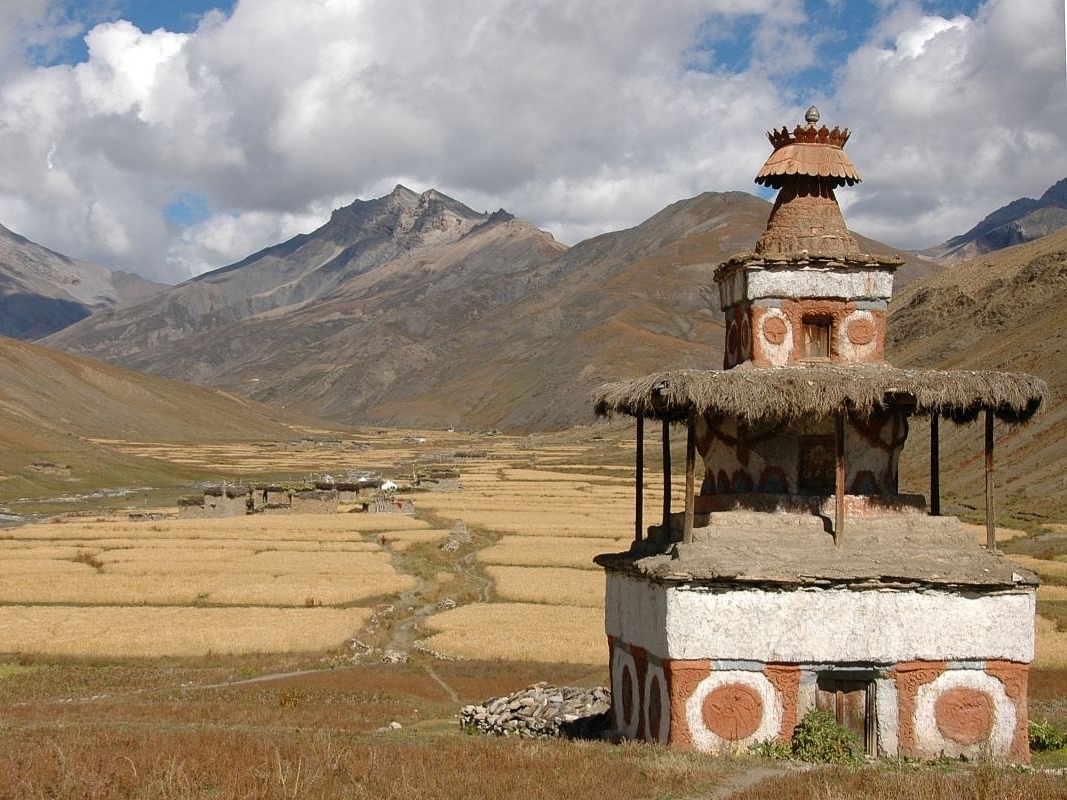
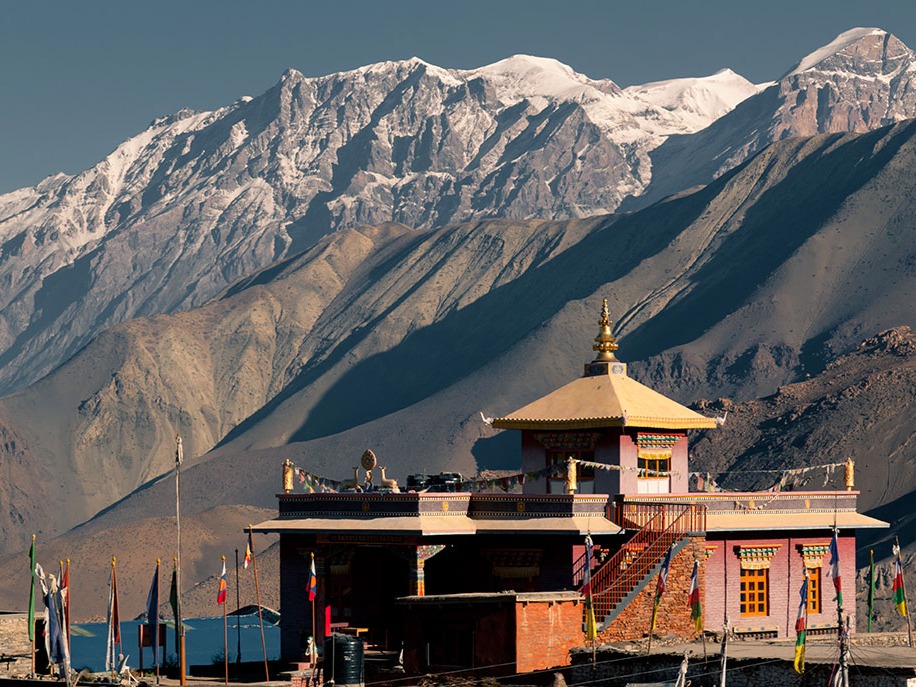
The Nubri people have preserved their language, traditions, and protected their centuries-old mantra-carved mani walls, monasteries, and Chortens. Other villages like Sama Gaon and Samdo offer trekkers an immersive experience of the traditional rituals, music, and dance, and a plunge into monastic life. The centuries-old monasteries, such as Pungyen Gompa, are where you can see the Tibetan architecture and colorful prayer flags.
The ascending and descending steep trail makes the Manaslu Circuit a moderate to difficult trek.
The Manaslu Circuit Trek is one of Nepal's most scenic and culturally immersive long-distance trekking routes, circling the majestic Mount Manaslu (8,163m), the world’s 8th tallest peak. What sets it apart is its perfect blend of remoteness, raw adventure, ethnic culture, and Himalayan grandeur.
Manaslu Circuit Trek rewards adventurers with a raw and authentic experience unmatched by more commercial routes like the Everest or Annapurna circuits.
Although it's one of the finest Himalayan treks in terms of natural beauty and cultural depth, the Manaslu region remains less explored due to several key factors:
Trekkers must obtain special permits, including the Manaslu Restricted Area Permit (RAP), and be accompanied by a government-licensed guide. Solo trekking is not allowed.
There are no airports nearby. The journey starts with a long and often bumpy road trip from Kathmandu to Machha Khola, making it less convenient than flying to Lukla or Pokhara.
The teahouses and facilities are basic in comparison to popular routes. After Samdo, accommodation becomes minimal, and trekkers may need to share dormitories or even camp during peak seasons.
Unlike the Everest or Annapurna regions, which attract thousands of trekkers each season, Manaslu sees far fewer visitors, maintaining its wild and unspoiled charm. This appeals to seasoned trekkers seeking solitude and authenticity but may deter those looking for comfort and convenience.
The trail demands good physical fitness and preparation due to the rapid elevation gain and the tough crossing of Larkya La Pass, making it more suitable for experienced trekkers. Crossing Larkya La Pass, the highest point, is the most demanding part, requiring an early 4 AM start to avoid strong winds and potential altitude-related complications.
The Manaslu Circuit Trek lies in a restricted trekking zone, which means several permits are mandatory, and solo trekking is prohibited. Here’s a complete guide to the permits, fees, and rules you need to know.
To trek in the Manaslu region, you need the following permits:
| # | Activity | Overnight | Distance / Time | Meals |
|---|---|---|---|---|
| Day 01 | Arrival at Kathmandu (1,365 m) and transfer to the Hotel – 30 min | 3-Star Hotel, Kathmandu | 30 Minutes | No |
| Day 02 | Drive from Kathmandu to Machha Khola (870 m) | Teahouse | 160 KM / 8-9 hours | All meals (B,L,D) during the trek |
| Day 03 | Trek from Machhakhola to Jagat (1,410 m) | Teahouse | 22 Km / 6-7 Hour | All meals (B,L,D) during the trek |
| Day 04 | Trek from Jagat to Dyang (Deng) (1,800 m) – (20 km - 7/8 hours) | Teahouse | 20 km / 7-8 hours | All meals (B,L,D) during the trek |
| Day 05 | Trek from Deng to Namrung (2660 m) | Teahouse | 20 KM / 6-7 Hours | All meals (B,L,D) during the trek |
| Day 06 | Trek from Namrung to Shyala (3,500 m) | Teahouse | 7KM / 4-5Hours | All meals (B,L,D) during the trek |
| Day 07 | Trek from Shyala to Samagaun via Pungyen Monastery (3585 m) | Teahouse | 17 KM / 5-6 Hours | All meals (B,L,D) during the trek |
| Day 08 | Acclimatization at Samagaun, Hike to Manaslu Base Camp (4,800 m) | Teahouse | 13 KM / 5-6 Hour | All meals (B,L,D) during the trek |
| Day 09 | Trek from Samagaun to Samdo (3,860 m) | Teahouse | 8 KM / 4-5 hour | All meals (B,L,D) during the trek |
| Day 10 | Acclimatization Day in Samdo – Hike to the Tibetan Border (5030m) | Teahouse | 7-8 Hour | All meals (B,L,D) during the trek |
| Day 11 | Trek to Dharmasala / Larkya La Phedi (4,460 m) – | 11.7 KM / 4-5 Hours | All meals (B,L,D) during the trek | |
| Day 12 | Cross Larkya la 5,106 m and descend to Bhimthang (3,790 m) | Teahouse | 5,106 m/16,752 ft Duration: 8/9 hours / | All meals (B,L,D) during the trek |
| Day 13 | Trek from Bhimthang to Tilje village (2300 m) | Hotel | All meals (B,L,D) during the trek | |
| Day 14 | Tilje to Dharapani & Drive to Besisahar | Teahouse | Teahouse/ Hotel / | Breakfast + Lunch + Dinner |
| Day 15 | Drive back to Kathmandu or Pokhara by local bus (1350 m/175km) – 7/8 hours | 3 Star Hotel | 175 km/109 miles / | Breakfast + Lunch + Dinner |
| Day 16 | International departure for homeward bound. | Hotel/Lodge | 3 Star Hotel / | Farewell Dinner |
Key Route Landmarks: ● Budhi Gandaki Gorge ● Tatopani Hot Springs ● Philim & Namrung Monasteries ● Sama Gaon & Samdo Villages ● Larkya Glacier and Lakes ● Bimthang Alpine Valley
Upon arrival at Tribhuvan International Airport, you will be greeted by our representative and transferred to your hotel in Kathmandu. After check-in, you'll meet your trekking guide who will give a detailed briefing on the trek and assist with a final gear check to ensure you're fully prepared for the adventure ahead.
Your trek begins with a scenic full-day drive from Kathmandu to Machha Khola, a small riverside village in the Gorkha District of western Nepal. The journey covers approximately 160 km, taking about 9 hours, depending on traffic and road conditions.
The route initially follows the Prithvi Highway, offering panoramic views of green hills, terraced farmlands, river valleys, and scattered rural settlements. As you move west, the road traces the Trishuli and Budi Gandaki Rivers, gradually entering warmer lowland areas.
At Arughat, the road turns more rugged and off-road. From here, expect a bumpy but adventurous 2-hour ride through traditional villages and forested hills until reaching Machha Khola.
About Machha Khola:
Machha Khola is a small Gurung village with about 150 households, nestled along the banks of the Budi Gandaki River. It offers basic but comfortable accommodation, usually in teahouses with Wi-Fi access but no attached bathrooms. It’s a great place to stretch out, unwind, and prepare for the trekking days ahead.
The surrounding scenery includes lush valleys, cultivated fields, and gushing rivers, making this village a charming starting point for the Manaslu Circuit.
Start your day with a hearty breakfast before setting out along the Budi Gandaki River. The trail gently ascends to Khorla Besi, a small riverside settlement reached in about 45 minutes. After a short break, continue to Tatopani, meaning ‘hot water’, where a natural hot spring invites you for a soothing soak (entry costs a few extra rupees).
After Tatopani, the trail climbs up and down through lush tropical forest terrain and scattered villages, passing Dovan or Thulo Dhunga, where you’ll likely stop for lunch. You’ll then cross several suspension bridges and potential landslide-prone sections before arriving at Jagat, a stone-built village with a checkpoint and local shops.
Expect narrow trails, forested paths, and a mix of riverbank walking and terraced farmland. This is where the remote charm of the Manaslu region truly begins.
Manaslu Conservation Area, where the landscape becomes more dramatic and culturally rich. You’ll begin with a gentle walk toward Salleri in about an hour, following the scenic Budi Gandaki River. Then, hike another hour to Philim, a large Gurung village with scattered homes and beautiful terraced fields.
At Philim, you’ll check your permits at the official checkpoint and continue to Chisapani, where you might stop for lunch. The trail now winds through forested ridges, bamboo groves, and small farm settlements. Tea breaks at Nyak Phedi and Pewa offer moments to rest.
Finally, after several ascents and descents through cliffside paths, you’ll reach a peaceful hamlet nestled among barley fields and towering ridges.
This is a long and scenic day with a mix of river crossings, stone steps, and forested trails. Look out for monkeys, waterfalls, and your first true glimpses of Himalayan culture.
Today's journey marks your entry into the culturally rich Nubri Valley, home to one of Nepal's most distinctive mountain communities. You'll experience a strong Tibetan influence in architecture, language, and daily life as you ascend higher into the Himalayan wilderness.
After breakfast in Deng, begin walking through beautiful pine and rhododendron forests. The trail ascends gradually through peaceful surroundings adorned with mani walls (stone walls carved with Tibetan Buddhist prayers), chortens, and colorful prayer flags fluttering in the wind.
Your first significant stop is at Bihi, a small village with traditional stone houses and Buddhist cultural markers. From Bihi, the trail climbs for about an hour through dense woodlands, possibly passing troops of monkeys, to reach Ghap, where you'll stop for lunch.
After lunch, the route continues along the Budhi Gandaki River, weaving through a serene forest of fir, oak, and rhododendron trees, and over some newly constructed trails past landslide areas (post-earthquake improvements).
You'll arrive in Namrung, a charming village with stone houses, carved wooden windows, and a checkpoint for permits. The village is one of the best places on the trail to experience authentic Nubri culture.
Note: Namrung is the gateway to Upper Nubri and offers stunning views of Ganesh Himal, Himalchuli, and Siringi Himal on clear days.
After breakfast in Namrung, begin a scenic uphill trek through alpine forests, prayer wheels, and stone-carved mani walls. Today’s hike is relatively short, allowing ample time for rest and acclimatization.
The first destination is the picturesque Lho village, a culturally rich settlement known for its massive Buddhist monastery (Ribung Monastery) and stunning views of Mount Manaslu. The architecture of the village reflects traditional Tibetan design, and prayer flags flutter across the rooftops, giving it a deeply spiritual atmosphere.
From Lho, continue the gradual ascent along forested ridges and open meadows to reach Shyala village, nestled beneath towering Himalayan peaks. Shyala is surrounded by a panoramic wall of mountains, including Mt. Manaslu (8,163m), Himalchuli, Nadi Chuli, and Ngadi Chuli.
Note: Shyala is one of the best places on the trek for 360° mountain views and peaceful surroundings.
Start your day with breakfast in the serene surroundings of Shyala, then head off for a spiritually enriching detour to Pungyen Monastery (Gompa), a must-visit sacred site in the Manaslu region. This 600–700-year-old monastery is perched in a glacial valley and offers a rare glimpse into the Tibetan Buddhist culture, prayer rituals, and breathtaking views of Mt. Manaslu’s south face.
The detour to Pungyen Gompa takes about 1.5 hours from Shyala through Yak Kharka, glacier moraine trails, and open alpine pastures. The surrounding scenery of pine, juniper, and snow-capped peaks enhances the tranquil atmosphere of this spiritual retreat.
After spending a peaceful time at the monastery, return to the main trail and continue towards Sama Gaon, one of the largest and most culturally vibrant villages on the Manaslu Circuit.
About Sama Gaon:
Situated in a wide valley at the base of Mt. Manaslu, Sama Gaon is a hub for trekkers, locals, and yak caravans. The village features stone houses, mani walls, and several Buddhist monasteries, as well as a health post, phone network, and shops. It’s also the ideal base for acclimatization and side trips to Manaslu Base Camp or Birendra Lake.
Sama Gaon is culturally immersive and visually stunning. Don't miss the evening walk around the village and a visit to Sama Monastery.
Today is a rest and acclimatization day at Sama Gaon, vital for adjusting to higher altitudes before crossing the Larkya La Pass. Instead of sitting idle, you’ll embark on a challenging yet rewarding day hike to Manaslu Base Camp, the base of the world’s 8th-highest peak.
Start early and first hike about an hour to reach the turquoise-blue Birendra Lake, a glacial lake with mesmerizing reflections of surrounding peaks. After soaking in its beauty, continue the steep uphill climb toward Manaslu Base Camp, located at 4,800 meters.
The trail is strenuous and gains about 1,200 meters in elevation, often winding through glacial moraines, rocky paths, and exposed alpine terrain. However, the views are worth the effort, with panoramas of Manaslu, icefalls, and surrounding ridgelines that leave trekkers awestruck.
The base camp provides a rare glimpse into high-altitude expedition life and offers a close-up view of Mt. Manaslu (8,163 m).
Important Notes: The hike is optional and should only be attempted if you're feeling well-acclimatized.
Pack lunch, enough water, and essential gear (warm jacket, gloves, sunglasses, trekking poles).
The trail can be icy or snow-covered depending on the season—check with your guide for safety.
If you're not up for the base camp hike, you can spend a relaxed day in Sama Gaon, explore local monasteries, interact with villagers, or hike to nearby ridges for milder altitude exposure.
Today’s trek leads you deeper into the high Himalayas, leaving behind tree lines and stepping into a rugged alpine landscape. The trail from Sama Gaon to Samdo is relatively short and gentle, making it an ideal day to rest, acclimatize, and explore.
You’ll start the morning with a steady climb along a wide trail that winds through open meadows, yak pastures, and glacial valleys. The scenery shifts dramatically, expect vast barren hills, snow-capped peaks, and crystal-clear skies. There are no major settlements along the way, offering a peaceful, undisturbed trekking experience.
Before the final ascent to the village, you’ll cross a suspension bridge over the Budi Gandaki River and gradually climb to reach Samdo, the last permanent settlement before Larkya La Pass.
About Samdo Village:
Situated near the Tibet border, Samdo is a small, windswept village that offers a unique blend of Tibetan culture, refugee heritage, and ancient mountain tradition. The village is home to many Tibetan-origin families, and you’ll notice Chinese goods and traditional lifestyles reminiscent of life across the border.
Spend the afternoon relaxing, interacting with locals, or taking a short walk up the nearby ridge for stunning views of the Manaslu range, Samdo Peak, and even parts of Tibet on a clear day.
Samdo is a key place for acclimatization and rest before the physically demanding crossing of Larkya La Pass in the coming days.
To adapt to the rapid altitude changes of our trek, we’ll take another valuable day for acclimatization in the picturesque village of Samdo. Today’s highlight is a scenic hike up to the Tibetan border, offering breathtaking mountain vistas and a fascinating cultural experience.
Along the way, we’ll witness the deep-rooted connections between Nepal and Tibet—where trade, traditions, and lifestyles have intertwined for generations. The route rewards us with sweeping views of rugged landscapes, high mountain passes, and the raw beauty of the Himalayas.
This enriching day not only deepens our cultural appreciation but also strengthens our bodies for the higher altitudes that await. By the evening, we return to our tea house for a warm meal and a well-earned rest.
Today is a short but crucial day of the trek as you hike to Dharmasala, also known as Larkya La Phedi, the final overnight stop before crossing the Larkya La Pass. The trail ascends gradually with a noticeable gain in altitude, so it’s essential to hike slowly and stay well-hydrated.
The journey starts with a crossing over a thrilling wooden bridge suspended above the Budi Gandaki River, followed by a scenic walk through rocky, barren landscapes and glacial valleys. The surroundings are now stark and alpine, with little vegetation, giving you clear views of surrounding peaks and the Larkya Glacier.
While the terrain is not particularly steep, the altitude increase to 4,460 meters can be physically demanding. Hence, this shorter day helps your body adjust before the big crossing the next morning.
About Dharmasala (Larkya Phedi):
Technically not a village, Dharmasala is a simple resting point with just a few basic teahouses offering dormitory accommodation. Facilities are limited but adequate for one night. The afternoon is best used for rest, acclimatization, or a short hike uphill (~200 meters) for better preparation for tomorrow’s high-altitude pass.
The views of the Larkya Glacier, Naike Peak, and Cho Danda are stunning from here. A side trip to Kharka Danda is optional if you have the energy.
Pro Tip: Eat well, drink plenty of fluids, and sleep early tonight. You’ll begin the Larkya La Pass crossing before dawn tomorrow.
Starting early morning to reach the top of the Larkya-La pass at 5,106 m. A strenuous and long climb overlooking the awesome scenery of the surrounding hills and valleys with Mt. Manaslu, Larkya Peak, Bouddha Himal, Himalchuli, and Peak 29. After a steep climb, eventually, you'll reach the top of the Larkya La pass, festooned with Buddhist prayer flags and stunning views. Such an amazing time at Larkya La, we will descend to Bimthang village. The coming down would be slippery and tough, so we highly recommend bringing crampons and a trekking pole. An overnight stay in Bhimtang village with a majestic valley.
Today is the most challenging day of the Manaslu Circuit trek. You will cross the Larkya La Pass on this day. After a few days of short hiking, you will have quite a long walking day today.
You will leave Larke Phedi at around 4:30 and start hiking to the top of the Larkya La Pass with a torchlight. Crossing a moraine, you will descend to a small lake.
From here, you will follow a steep, rocky, unclear trail that will cross the south, steep, grassy slope. You will walk to the edge of the moraine and descend from here to four frozen lakes.
The views are heavenly. From here, the trail steeply ascends to the top of the Larkya La Pass.
After a tough walk on the Larkya-La pass, today will be a pleasant walk on the gradual downhill through the Gho village, and then we will reach Tilje village. As well, the walk also enters through pristine woodlands full of rhododendrons, pines, and oak tree lines, passing several farm shades to reach the Phurke Khola. From Bhimthang, the trail is mostly downhill, and this trail combines the Dharapani with the popular Annapurna Circuit Trail. We will go through the Phurke Khola, then eventually reach the beautiful Tilje village and where you can find the sharing jeep to Besisahar. An overnight stay at a beautiful local guest house.
Today is the last day of the trek. Leaving Bimthang, you will walk downhill through lush forests of rhododendrons. In a couple of hours of descending, you will reach Karche.
You may have lunch here and continue descending to Dharapanu. The trail goes through small villages such as Goa and Tilje and lush forests, crossing a few bridges and terraced fields on the way.
Our final morning on the trail begins with an early breakfast in Tilje, followed by a short and pleasant trek to Dharapani. Along the way, we bid farewell to the charming village, passing through lush forests, traditional houses, and terraced fields one last time.
At Dharapani, we transition from trekking boots to road travel, boarding a vehicle for the scenic drive to Besisahar. The route winds through verdant hillsides, river valleys, and small settlements, offering a different perspective of the landscapes we’ve been walking through for days.
This marks the gentle conclusion of our trekking adventure — a shift from the steady rhythm of the trail to a relaxed journey, giving us time to reminisce about the challenges conquered, the beauty witnessed, and the friendships formed in the Himalayas.
After having breakfast, we will head to Besisahar by local sharing jeep, and it takes 3 hours to get to Besisahar. After that, we will drive back to Kathmandu, and approximately 6-7 hours to get to Kathmandu. Besides local vehicles, we highly recommend taking a private vehicle from Besisahar to Kathmandu. Our memorable adventure will be terminated in Kathmandu.
Note: After Besisahar, you can drive to Pokhara instead of Kathmandu. If you have ample time, you can explore the beautiful Pokhara with majestic Annapurna Himalayas and mythical terrains.
On this day, you will return to Kathmandu. Leave Besisahar early in the morning. The first, around two hours of driving, will be a little bit bumpy.
After Dumre, you will enjoy a comfortable ride to Kathmandu. The highway follows lush rolling hills alongside a river and terraced fields. Upon reaching Kathmandu, the guide will drop you at the hotel.
The rest of the day is free in the city. Unpack, explore, and buy souvenirs. We may meet you later in the evening to give you the trek certificate.
Last day in Nepal, an amazing country of Himalayan wonders, as per your flight time, leaving your hotel. Where our staff drops you off at the airport. After a great, memorable adventure with an enjoyable time on the Nepal Trip.
The success and safety of your Manaslu Circuit Trek depend heavily on what you pack. Weather conditions can vary drastically from warm jungle trails to freezing high passes, so packing smart is crucial.
For the Manaslu Circuit, high-altitude insurance up to 6,000m must cover the following:
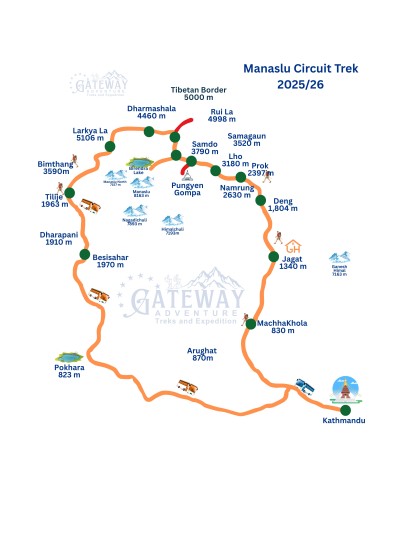
You’ll need the following five permits:
All of these permits are included in our trek package.
To book the Manaslu Circuit Trek, simply contact Gateway Adventure Treks and Expedition via our website or customer service for availability and detailed information. A 10% deposit is required at the time of booking to secure your spot, with the remaining balance due before the tour starts. Payments can be made through secure methods such as bank transfer, credit card, or online platforms. For cancellations or changes, Gateway Adventure Treks and Expedition provides clear guidelines, with partial refunds available depending on the timing. Be sure to review the booking terms and conditions to ensure a smooth process.
Though we recommend booking in advance to secure your spot on the tour, Gateway Adventure Treks and Expeditions accepts the last- minute bookings. For these bookings, full payment (100% of the tour price) is required at least 24 hours prior to departure. Please note that while we strive to offer flexibility, we cannot be responsible for any delays or unforeseen issues such as weather conditions or unavailable accommodations.
For last- minute bookings or inquiries, contact us at +977- 9851360663 or email us at info@gatewaytreks.com
Experience local culture
Best Price Guaranteed
Well-crafted itinerary
Free Sightseeing & Hotel
gatewaytreks@gmail.com







© Copyright Gateway Adventure Treks and Expedition Pvt. Ltd., 2026 All Rights Reserved